
Carpenter Ants
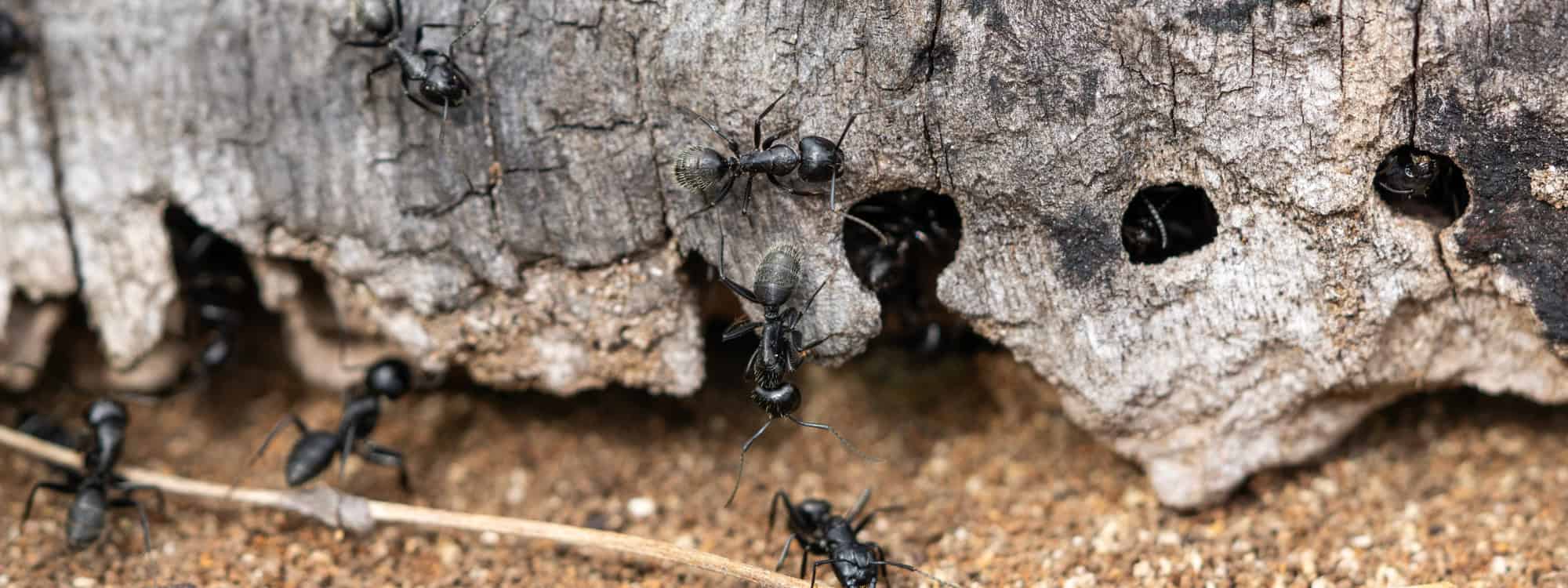
Identification: Carpenter Ants found in Muskoka, Ontario are among the largest ants, typically measuring between 6 to 12 mm in length. They are distinguishable by their dark black or reddish-brown coloration and segmented bodies. Carpenter Ants feature prominent mandibles and a robust build, which aids in their wood-excavating behavior.
Habitat: In Muskoka, Carpenter Ants favor habitats rich in moist or decaying wood. They commonly nest within trees, logs, stumps, and occasionally, structural wood within buildings. These ants are adept at establishing colonies in areas where wood provides both shelter and nesting material, making them a potential threat to the structural integrity of wooden structures.
Diet: While Carpenter Ants do not consume wood for sustenance, they excavate it to create galleries and tunnels for nesting. Their diet primarily consists of sugars, proteins, and insects. They forage extensively for food sources, including honeydew from aphids and other sugary substances, as well as scavenging on dead insects and other protein-rich materials.
Behavior: Carpenter Ants exhibit a complex and highly organized social structure within their colonies. They are predominantly nocturnal, with peak activity occurring during the night when they are actively foraging for food and expanding their nests. Carpenter Ants are known for their meticulous tunneling behavior, which can cause significant structural damage over time. They often leave behind sawdust-like frass as evidence of their activity. These ants communicate and coordinate their activities through pheromones, which helps in the efficient management of their colony tasks, including foraging, nest maintenance, and defense. When deprived of a reliable food source or suitable nesting site, Carpenter Ants may establish new colonies, leading to the spread of infestations. Understanding their behavioral patterns is crucial for effective prevention and control measures.
Prevention: Preventing Carpenter Ant infestations involves several key strategies. First, reducing moisture around buildings by fixing leaks and improving ventilation can deter these ants, as they are attracted to damp environments. It’s crucial to eliminate direct contact between wood and soil, such as using concrete bases or treated wood. Sealing cracks and gaps in foundations and walls helps to deny entry points, while keeping food tightly sealed and maintaining cleanliness minimizes attractants. Bug Free Muskoka’s General Pest Control Service complements these preventive efforts with their 4 layer defense system around your home’s exterior. This service targets potential entry points and nesting sites, effectively blocking pathways that pests like Carpenter Ants might exploit to gain access indoors. By proactively applying treatments designed to repel and deter pests, Bug Free Muskoka helps homeowners maintain a pest-free environment, ensuring peace of mind throughout the year.
Control: Effectively managing Carpenter Ants requires locating and treating their nests directly. This often involves using insecticides or baits specifically formulated for ants. Treating outdoor nests near structures and applying barriers around foundations can help prevent re-infestation. Regular inspections and proactive measures are essential to disrupt their colony dynamics and mitigate the risk of structural damage caused by these wood-excavating ants.
If you are concerned about pests like Carpenter Ants, Woodland Pest Solutions offers a proactive solution with their General Pest Control Service. This preventive maintenance approach not only safeguards homes from nuisances like Carpenter Ants but also contributes to peace of mind, ensuring a pest-free environment year-round.